
AI or Human?
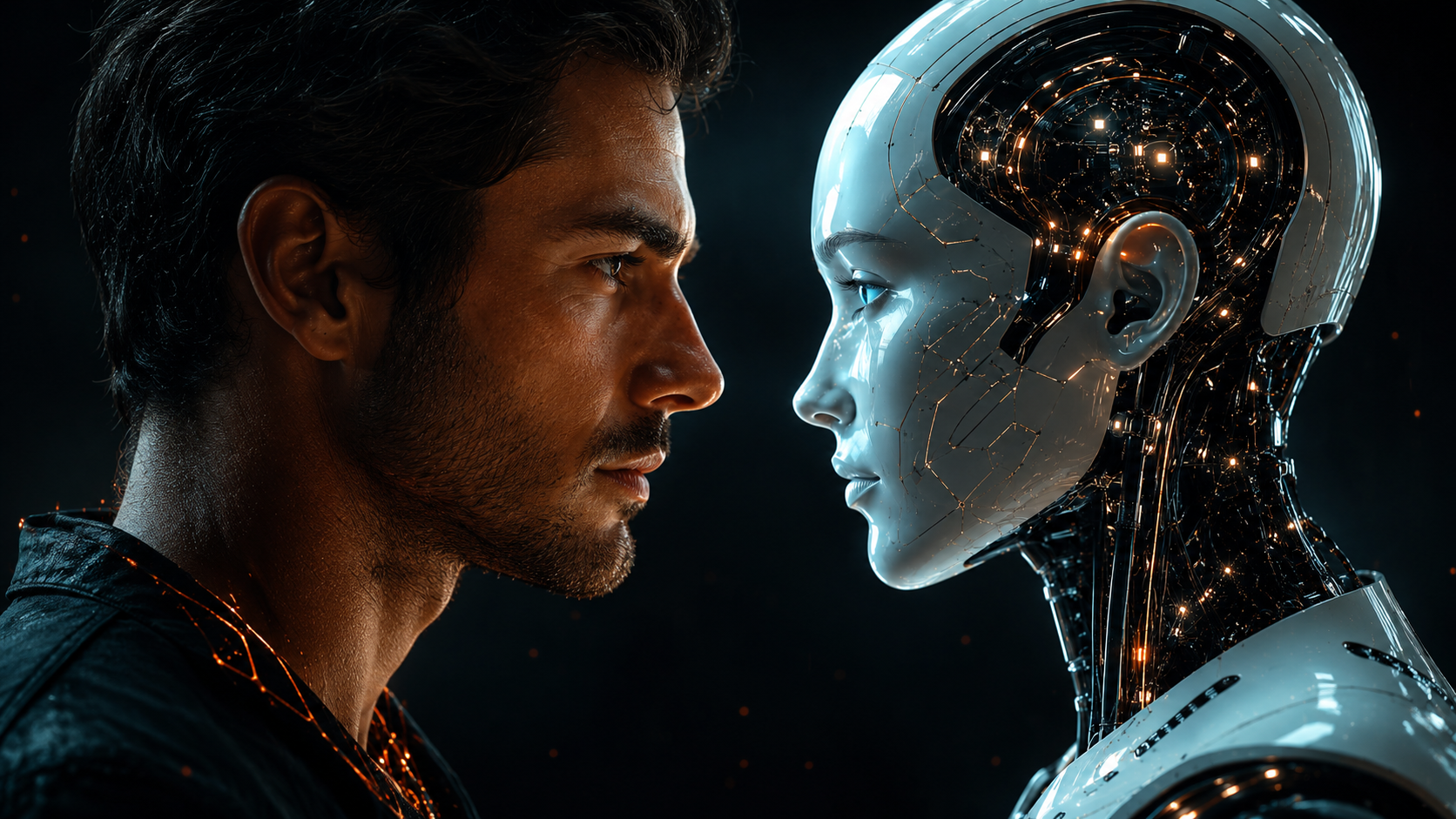
In full transparency—this was written by a human and edited by AI. See, both can coexist. Hope you enjoy.
Here’s a polished version that keeps your conversational voice, humor, and central argument while improving clarity, grammar, and flow.
There has been plenty written about AI and what it is capable of. Much of the conversation is rooted in fear, though many of those concerns carry legitimate warning signs.
I want to be honest right up front: I am writing this as both a business owner whose work could be significantly affected by AI—website design, branding, and creative work—and as a worship pastor in the local church, which should remain relatively safe until someone develops a robot capable of replacing me. That probably won’t happen for at least a few hundred years.
When we step back from the competing narratives surrounding AI, the truth probably lies somewhere in the middle. It likely isn’t as terrible as many fear or as wonderful as others hope. The same has been true of nearly every major invention of the last few hundred years. New technology carries both incredible potential and a darker side.
Cars were created to make travel and transportation easier, and they succeeded. However, they are also responsible for more than one million deaths globally each year. At the same time, most people in the United States cannot imagine life without them. Cars are helpful, dangerous, and necessary. All three can be true at once.
When electricity began spreading in the 1880s, people responded with both fear and excitement. The same thing happened when computers became common and the World Wide Web began reshaping everyday life. Some feared these technologies would destroy industries and eliminate jobs. Others believed they would bring humanity together through shared ideas and greater access to knowledge.
Technology certainly changed the world, but the results have rarely been as wonderful as the optimists predicted or as disastrous as the doomers warned. There are always doomers—people convinced that every new development signals the end of everything good. Once again, the truth usually lies somewhere in the middle.
If you found this article, you are probably visiting my business website and weighing your options. Should you use an AI website builder or hire a person? Should you trust ChatGPT to create your artwork and design your marketing materials, or should you work with an experienced designer?
Rather than trying to convince you that one option is always right, here is the truth: AI is a tool, and like any tool, the person using it matters.
Anyone can walk into Lowe’s or Home Depot and purchase a table saw, a miter saw, a few drills, some wood, and a bottle of glue. A skilled craftsperson can use those tools to create a masterpiece. Someone else might use the exact same equipment and lose a finger along the way.
The tools may be identical, but the outcomes certainly are not.
Simply having access to a tool does not mean you know how to use it well. Some people are building enormously successful businesses with the same AI tools available to everyone else. The difference is that they understand how to use those tools strategically. They know how to prompt, refine, evaluate, and shape the results.
AI is only as effective as the person directing it. There still needs to be a craftsperson behind the work—someone with the experience, judgment, creativity, and vision to guide what is being created.
So, what does this mean for you?
Perhaps you are starting a business or nonprofit. Maybe your organization needs a brand refresh, an updated website, or a more polished public presence. The truth is that tools exist for you to do nearly everything yourself. I am not trying to hide that reality.
You may even save money upfront by designing your own website and slowly learning the many tools needed to create branding, marketing materials, and digital content. But ultimately, you either have the skill, passion, and time to do that—or you don’t.
Many of the people I work with have already tried doing it themselves. They eventually hire me to improve their website’s design and functionality, simplify the customer experience, strengthen their branding, and optimize the site for search engines.
Others have used semi-custom website services. You send them your logo, color palette, photos, and information, and a cookie-cutter website comes out the other side. That may work well for some organizations, especially if they are comfortable paying $200 to $400 every month for the life of the business or nonprofit.
The initial design may be advertised as free, and the finished website may look and function reasonably well. However, the ongoing subscription can eventually cost tens of thousands of dollars. There is certainly no shortage of companies eager to put you on that kind of plan.
You could also create a free AI-generated Wix website. There is nothing inherently wrong with that, especially if your primary goal is simply to say that your business officially has a website. But I am guessing you have either already tried that, or the entire process feels overwhelming and you just want someone—anyone—to make it happen for a reasonable price.
After all, website design, search engine optimization, branding, widgets, domains, mobile responsiveness, and dynamic hero videos can quickly become far more than you ever wanted to manage on your own.
Truthfully, that is why I do what I do.
Too many friends, family members, business owners, and nonprofit leaders asked me for help for me to ignore the need. They did not want to rely exclusively on AI. They did not know where to begin or what problems they might encounter. Designing everything themselves was simply a nonstarter.
So, The Creative Co. was born.
And the “Co.” does not stand for company. It stands for collaboration.
I do not create cookie-cutter websites. I work collaboratively with each client to build something carefully crafted, mission-forward, and uniquely suited to their vision. I combine creative experience with today’s best tools—including AI when it is useful—to produce work that feels intentional, personal, and distinctly yours.
I work tirelessly until you are not merely satisfied with the result, but genuinely excited about it.
If you feel overwhelmed, unsure where to begin, or simply ready for someone to help bring your vision to life, reach out. Let’s talk about the next step.